

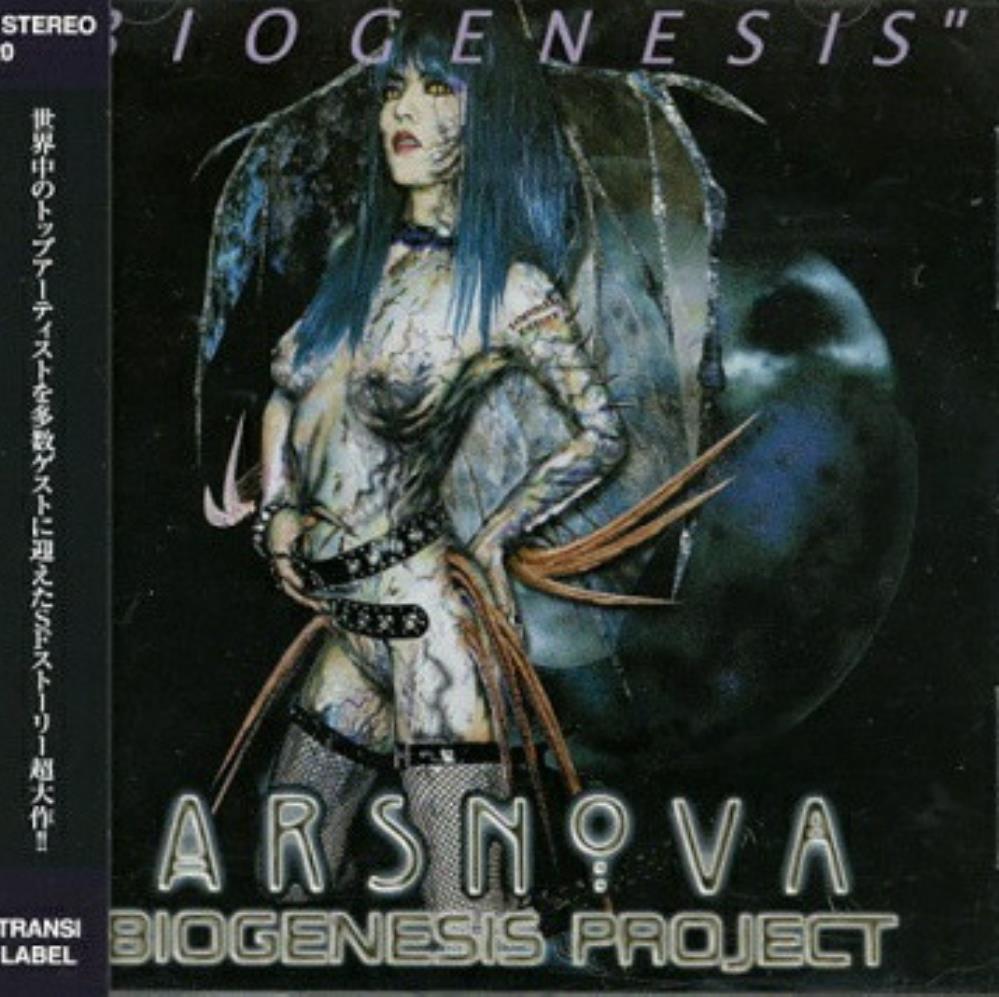
Las japonesitas ELP acompañadas por tipos como Arjen Lucassen (Ayreon), Lucio Fabbri (la bestia al violín en Premiata Forneria Marconi). Claudio Simonetti (de la banda italiana Goblin, y justamente hacíamos mención de la relación sonora entre Ars Nova y Goblin), Gianni Leone (Osanna), Atsushi Hasegawa, Masuhiro Goto, Alex Brunori (Gerard, otra de las grandes bandas japonesas), y otros miembros de buenas bandas niponas, como Takeo Shimoda (Cyclone), Takehito Kimura (Tiananogue), Numero Ueno (Outer Limits, Gerard), todos ellos reunidos en este disquito de un equipo "all stars" liderados por la genial Keiko Kumagai, con un clima oscuro, donde permanentemente juega con la dualidad entre lo cálido y armonioso y lo caótico y pesado, en otro disco de factura notable. Si te gusta el rock sinfónico a lo ELP pero con sonido más duro, si te gusta la onda del rock progresivo italiano más oscuro (a lo Goblin) y si te gusta el hard rock más complejo que te puedas imaginar, no podés dejar de lado a este tremendo proyecto japonés. Otro tremendo aporte de LightbulbSun!
Artista: Ars Nova
Álbum: Biogenesis Project
Año: 2003
Género: Hard rock sinfónico
Duración: 45:02
Nacionalidad: Japón
Año: 2003
Género: Hard rock sinfónico
Duración: 45:02
Nacionalidad: Japón
Otra vez traemos a estas inocentes japonesitas para que te vuelen la cabeza con la pomposa y enfermantemente compleja y ecléctica música que hacen. Pero antes que nada, vamos a repasar los prestigiosos personajes que intervienen en este disco, vean la lista de colaboradores y se van a encontrar con un tal Arjen Lucassen (Ayreon), un tano llamado Lucio Fabbri (PFM), otro tano llamado Gianni Leone (Il Balletto di Bronzo), dos nipones llamados Atsushi Hasegawa y Matsuhiro Goto (de la superbanda japonesa Gerard, háganme acordar de que les traiga algún disco de estos otros ponjas). Y después muchos otros menos conocidos: Alex Brunori (Leviathan), Claudio Simonetti (Daemonia), otros dos ponjas, uno llamado Takeo Shimoda (Nuovo Immigrato) y el otro Takehito Kimura (Tiananogue), entre otros.
Claro, en realidad quedó la cosa de "chicas" porque empezaron siendo chicas, luego de la deserción de algunas de ellas, habrá sido difícil encontrar sustitutos femeninos y se prendieron alguno muchachos nipones, pero siempre quedó el mote de "chicas", y sobretodo porque el liderazgo y la composición siguió en manos de esa rebuscada geniecita llamada Keiko Kumagai, pero esta vez con más compañía.
Éste es un álbum conceptual con influencias de ópera rock. Debido quizás a los muchos músicos invitados, el álbum (y a diferencia de sus anteriores trabajos) se ha convertido en una mezcla de prog japonés e italiano con mucha intenciones (obvio!) a ELP y Goblin, ricamente adornado con los riffs de Arjen Lucassen más los violines de Lucio Fabbri con su estilo Premiata Forneria Marconi sellado a fuego, mientras Keiko demuestra estar a niveles cercanos a tipos como Keith Emerson o Erik Norlander, pero incluso no faltan las posibles analogías compositivas con otros que nada que ver como Jean Michelle Jarre (sobretodo en la creación de atmósferas) o Klaus Schulze en su experimentación con la programación: muchas atmósferas espaciales sumadas a climas épicos dan marco al disco, mientras que a veces casi se sumergen de lleno dentro del metal progresivo, aunque este álbum es potente de principio a fin. Un disco fresco, diferente, lleno de talento y maravillas como nos acostumbran estas japonesas.
En definitiva, otro disco para no perderse, que aunque podríamos apreciar cosas que podrían ser mejores, no dejan de ser una muy agradable experiencia sonora para nuestros oídos. Y dado de la cantidad de gente que no conoce estas maravillas que estamos presentando, vaya a saber uno la cantidad de cosas que existen y dan vueltas por ahí y todavía no la hemos escuchado.
Vamos ahora con los comentarios en inglés...

¿Que les puedo decir de este gran disco? NO sean salames y no se lo pierdan, otra cosa no puedo decirles...
Grupo liderado por la teclista y compositora Keiko Kumagai. En sus inicios un trío femenino. Pero en estos días debe ser difícil encontrar mujeres músicos con nivel y gustos setenteros. Desde que perdió a la bajista, tras el tercer disco, usa elementos masculinos invitados. Encontré dos discos de los tres buscados. Su segundo, ”Transi” (1994), en una línea EL&P, con elementos a lo Crimson y a lo Goblin (una de las debilidades de Keiko) y el último “Biogénesis” (2003), con tintes mucho más actuales y modernos, dentro del prog, con invitados italianos y, devolviendo favor, Arjen Lucassen, con el que ha colaborado en su proyecto Ayreon, aquel instrumental. El último con algunos temas cantados en inglés.Quizás el estilo no le agrade a todo el mundo, pero vamos! ¿cuantos de los grupos presentados aquí son del agrado de todos?. Muchos discos que he presentado aquí no son de mi entero gusto pero no dejo de descubrirle la veta artística a un tipo de música donde lo artístico prima sobre todos los demás esquemas (y que por algo se lo emparenta con el "Art Rock"), pero debo aclarar que estas chicas sí me gustan. Será todo lo que quieran... pero son fantásticas.
Una vez mas Keiko Kumagami se embarca en un proyecto sin precedentes que reune a un equipo "all stars". Esta nueva aventura intitulada BIOGENESIS es una obra conceptual de tono de ciencia ficcion. La música es un rock sinfonico a la máxima expresión con gran esmero y cuidado en las piezas de detallada composición. Este album a mi parecer es el mejor hecho y el mas maduro del grupo ARS NOVA y es correcto pensar que se logra apreciar la intervención de cada músico lo que da mayor riqueza al sonido y que además es en su mayoría dominado por teclados. La música tiene un sonido metálico oscuro y frío que prácticamente se podría describir un paisaje a la Giger con mucha cercanía a lo que actualmente vienen haciendo grupos como DAEMONIA e IL BALLETTO DI BRONZO. La dulce voz de Mika es una pieza clave dentro del concepto pues es el punto cálido y humano que contrasta con lo metálico y frío de la música , y a la vez la voz de Gianni Leone es el lado oscuro y caótico lo que hace un concepto de dualidad dentro de la música. En mi opinión uno de los mejores albumes del año.La Caja de Música
Para hacer este álbum cada músico grabó por separado su parte y el trabajo completo se mezcló en Japón.
Vamos ahora con los comentarios en inglés...
Imagine three fragile Japanese ladies ... dressed in sexy SM outfits, behind a rack of keyboards and sounding like a reincarnation of Emerson, Lake and Palmer. Then you are close to what Ars Nova is about: presence and high quality music. So I was very thrilled to hear the new album, called Biogenesis, a concept album with rock opera influences. Unlike their previous albums, they have invited several guest musicians, so the Biogenesis is not entirely representative for Ars Nova, but it shows a different side of them, of course not losing the elements that mark the music of the band.Marcel Haster
Due to the many guest musicians, the album has become a mix of Japanese and Italian prog, lavishly garnished with the masterly, yet familiar, guitar riffs by Arjen Lucassen (Ayreon, Star One), and this results in a very diverse and sometimes a bit complex sounding album. Biogenesis opens with a monologue by Robert Allen, introducing the story and this is followed by Keiko Kumagi on keyboards and organ and the Ayreon guitar sound, which creates an epic atmosphere, with lots of space sounds, breaks and solos by guest musicians Gianni Leone (Il Baletto Di Bronzo), who is also one of the vocalists, and Claudio Simonetti (Daemonia). "Escape," the second track, has a few nice violin solos and is the first real vocal track, with Alex Brunori (ex-Leviathan) on vocals and Keiko on organ. "Mother Earth" starts with keys in the vein of IQ's Martin Orford and features Mika on vocals, which is really something as she sings in English, but it is not easy to understand. I guess this gives it a true Japanese touch, but she has a sweet voice and it is pleasant to listen to.
"Metamorphosis" is an instrumental track, where you can finally truly hear how good Keiko Kumagi is: a smashing keyboard solo with a clear reference to ELP (Peter Gunn)! "Humanoid's Breakfast" is a bit of a weird song, where Japanese sounds are mixed with electronic drums and voice samples, a cacophony of sounds, which ends with a scream, one of the lesser tracks on the album. However, "Against The Meteors" makes that up, with more grandiose keyboard play by Kumagi, this time only supported by drums. And then we have already reached the final track, "Trust To The Future," where Lucassen's guitar is back, just as all the other guest musicians. Here Mika's voice creates a contrast with Alex Brunori, and there are several synth solos as well as a leisurely played solo by Arjen Lucassen. This is the song with the "action" in it, changes in melody, vocals, guitar and thus a worthy close to the album.
Biogenesis is not an easy album, more an adventure, where different styles and cultures are blended to a somewhat consistent mix. Fortunately the power of the album lies in the music, and especially the many keyboard solos are excellent and make you beg for more. I am no fan of Italian vocalists, so I was happy there are not many vocal parts on the album, although Mika's vocals brightened up the songs. Production could use some work, but all in all, Ars Nova can be proud of this album and you, reader of this review, should try this album, you won't be disappointed. Furthermore I vote that Keiko Kumagi is listed with the great keyboard players, like Keith Emerson, Rick Wakeman and Erik Norlander!
Sounds more modern, European retro heavy prog, or American retro pussy prog metal. Especially it sounds Italian modern semi-heavy semi-symphonic prog. But there's much usual Ars Nova here - even too much. It was awesome when it was novelty. Anyway, this is somehow eclectic, even better than other Ars Nova's albums. Trust to the Future sounds like Italian Progressive Rock appreciation song.Fastro
What a confusing sub-genre!! --- I have known this band quite sometime ago (mid nineties, I think) and just recently (couple months ago already) got the CD. My first impression is still they're gonna play ELP like music as I knew the band since the first time. It's not the case with this album, actually. ELP music has never got any "spacey" element but this album of three gals from Japan has a lot of space rock elements: Klaus Schulze, Jean Michelle Jare, Larry Fast, etc blend with symphonic rock style. If you have listened to Ayreon "Human Equation", you got it right! It's in a way similar to that kind of music. I would say it's a future oriented scientific-based space progressive rock (my term). If you correspond the music with the movie it's the kind of "Matrix" or "Resident Evil". Well, it's probably not the exact analogy, but it's under that kind of category, I would say. So, the band has pushed forward their musical strengths and reinvent themselves into new progressive style, leaving out the ELP like music. So, for you ELP fans, you may enjoy this album as well and you may probably think that "this is what ELP would have done if they still create new album in 2004".Gatot Widayanto
Why is it future oriented? It centers around the story in 2301 A.D. when human civilization is approaching saturation point. The Sahara Desert has been urbanized. No nature is left. The ozone layer has been completely destroyed by air pollution. An artificial sun called Golath is shinning in the dome which covers the earth. All life, except human, is living in the Center of Nature Monument and we can see it on the web. Pipe roads in the deep sea connect each ocean city and countless high-speed elevators go down to the underground city of Metropolis. [source: the band's website]. Of course, it's all imaginary based. But, let's not dwell into the story in detail as we can visit the band's website - get straight to our business : the music.
Introduction - Biogenesis Melt Down: It's an introduction of the whole story with relatively long narration with spacey nuances depicting the scientific laboratory. The symphonic orchestration follows accompanied with lead guitar work by Arjen Lucassen. The keyboard at background provides the symphonic texture of this track. The rather complex keyboard sounds and female chanting have accentuated the imaginary situation the band tries to present. Musically, this track contains complex yet beautiful keyboard sounds that able to create appropriate atmosphere for its futuristic journey.
Escape: It's a less complex song with a medium tempo rhythm section augmented nicely with electric guitar. The vocal line is sung in operatic style combined with wonderful orchestration and complex keyboard / organ sounds in the vein of Keith Emerson (partially). For me personally, the multi keyboard / synthesizer harmony sounds is fantastic. This track has shifting time signatures with complex transitions. The ending part is dominated by keyboard in original rhythm followed by voice line.
Mother Earth: This track has a very nice (and melodic) passage with female takes the lead singer role. The melody that goes with the singing of female singer is wonderful as it has a nuance of traditional homeland cultures. It is sung in English but maintaining the Japanese dialects. For me, it's a kind of "break" before the band brings me to another complex music. Even though it has different structure and nuance, this song reminds me (in such a way) to Steve Hackett's "The Red Flower of Tachai Blooms ." of "Spectral Morning" album in the seventies.
Metamorphosis: As the name implies, this instrumental track has various time signatures exploring the use of keyboard / synthesizer in metamorphosis (of probably the next generation of human beings). The song contains a wild exploration of keyboard / synthesizer works punctuated by some percussion sounds; continued by a full drumming as the full music flows. It satisfies my listening pleasure as it has shifting time signatures. When the music turns to a faster tempo with solo keyboard takes the melody, it reminds me to the work of Rick Wakeman, performed in spacey style. There a re some transition pieces with quieter musical passage. At the end of the track the band puts symphonic flavor to conclude the story this song carries.
Humanoid's Breakfast: It's another break as this track offers a short of situations with a future generation babies. It has a passage of lyrics "Hey mommy, I'm ready" talked in a digitized voice of children. Like previous track, this one explores the keyboard / synthesizer sounds accentuated by human dialogues and screams ..
Against The Meteors: The title itself leads to an imagination of star wars or the kind like that. The organ rhythm at background reminisces Keith Emerson work but accentuated with a keyboard style (at the surface) that Emerson has never played before. It's a stunning exploration of keyboard and synthesizers with drumming sound mixed thinly throughout the track. I can sense a sort of mellotron-like sound at the end of the track. It's a symphonic / spacey style of music.
Trust To the Future: Guitar is brought back here in this track. On intro, the guitar accompanies keyboard sound. The music flows to a very nice passage with English-Japanese singing style by female (it must be the voice of Mika Nakajima). The music turns into a faster tempo with operatic male voice and keyboard played in orchestra style. The music then returns to a slower tempo with male voice; accentuated (and followed by) electric guitar work. This is an excellent composition. The intertwined guitar and synthesizer solos combined with the work of violin has made this track wonderful. Piano sometimes contribute its sound during short transition piece. I think, this is the track where all instruments used in this album demonstrate their obvious solo / sound (including bass guitar). For those of you who like rock opera music, I'm sure you would enjoy this track. And this track is really well positioned at the end of the album. Despite music, the title itself projects a positive image of trusting our future (regardless whatever is happening through a life passage of human beings).
Overall, even though this album is different with any album of ELP, but there are still influence of Keith Emerson here and there. This album is successful to deliver a powerful message on the concept , "thoughts" and "fantasy" the band intends to communicate - through sound exploration and musical nuances. If you like Ayreon "Human Equation" , you may enjoy this album.
On rating, I would tend to give five stars especially if I base my decision on typical rating for Radiohead albums given by colleague reviewers in this page. In my opinion, this album is much better, and much prog, than Radiohead "OK Computer" where many have given five stars. Actually, it's not fair to compare these two bands as they have different kind of music. But when it comes to rating, it's not fair either to give Biogenesis less star than OK Computer. But I think, based on my all listening of prog music, this album deserves four stars. Final judge is yours.
On this CD the Japanese progrock trio Ars Nova delivers a SF concept: it's 2301 and the earth is overcrowded, without nature, the ozone-layer has disappeared and an artificial sun is shining, a kind of Greenpeace doom-scenario! The story is written by Numero Ueno, the #1 Japanese proghead and deals about a fanatical nature organisation, space ships, robots, several ideologies and the deep-rooted evil in mankind. On this CD Ars Nova is supported by an impressive range of progrock artists: members from PFM, Goblin and Il Balletto Di Bronzo, the rhytm-section from Gerard and, I proudly presents, the Dutch genius Arjen Lucassen (the brainchild behind Ayreon). The music is in the tradition of the Japanese bombastic keyboard approach: dazzling synthesizer flights, virtuosic keyboard (inter)play and heavy floods of Mellotron and Hammond organ. In between there's frequently Arjen's fiery, very distinctive guitarsound. A strong contribution is from violin player Lucio Fabbri (PFM), he sounds like Jean-Luc Ponty at his best but the vocals are also OK featuring female singer Mika and ex-Leviathan vocalist Alex Brunori. At some moments the vocals sound a bit too theatrical and the compositions a bit fragmentic, in my opinion this CD would have gained at least one more star if Arjen Lucassen would have lived in Japan because of his compositional and producing skills. BUT IN GENERAL THIS IS A GOOD AND ENTERTAINING PROGROCK CD!Erik Neuteboom
We'll even have some narrative vocals during this sci-fi concept album about the creation of a super creature being able to survive in any natural environment.If all these creatures would look like the one featured on the front cover, I would immediately demand that I be brought into this time period. OK, OK, I'm dreaming.Daniel ZowieZiggy
This album sounds rather different than all their previous efforts. It is a lot harder, almost prog metal at times ("Melt Down"). But in the case of "Ars Nova", the symphonic element is fortunately always present. Of course, remember that Arjen Lucassen plays the guitar on this album as a guest. A song as "Escape" is closely related to Arjen's work, that's for sure. Almost wild my prog friends.
These guests (about half a dozen) add a great value to this work, they bring another dimension and great additional sounds (guitar, violin, keyboards-which are three now).
The addition of some vocals are a plus as well IMO. It is pleasant to listen how this all-instrumental band has turned into a more traditional form. Gianni Leone (lead vocalist from the dinosaur band "Il Balleto Di Bronzo") is rather convincing during his parts. But don't worry if you are an old "Ars Nova "fan : the ELP-ish orientation is still there. The bombastic keyboards will link you with the masters very often.
Some tracks are of no interest like "Mother Earth" and the screaming "Humanoid's Breakfast" but they aren't plenty of that kind and these two together clock at less than six minutes.
This album is strong from start to finish. The delicious "Metamorphosis" is the most "ELP" oriented song. Fully instrumental, it features brilliant musicianship, it is finely symphonic but with such a great beat! The best track out of this offering IMHHO. Fully bombastic. Staggering.
Difficult for "Against the Meteors" to reach that level, but the heavy keyboards are all mighty and make of this one a really powerful track.
But what should be the big one here is the epic and closing number : "Trust to the Future". Over fifteen minutes of a great symphonic journey (during ten minutes). Maybe too pompous at times, but it is mixed with some childish vocals (à la "Teru's Symphonia") typical for Asian female vocals.
This song is of course complex. An hymn to synthesizers, but not only since the excellent violinist from P.F.M. (Lucio Fabbri) plays some very good parts and the theatrical vocal style of Gianni Leone fits perfectly well this melodic piece of music. But the last third of this song is somewhat chaotic. Too bad.
This album is on the edge between three and four stars. Seven out of ten.
Ars Nova is back with a new cd which is different than their previous records. This new cd actually has a singer which plays one of the main roles along with the keyboards department. Ars Nova is still splendidly symphonic, however, this time things are a little different since there are vocals, violins and so on. In short, GOOD STUFF BY ARS NOVA !Dan Yaron
This girls rules. Very cool album. And the guests make very good contributions. If you are fan of Il Balleto's "YS", this album will like you.fuc_king77
Ars Nova is a intelligent, dark, original band. Besides this girls have attitude. A Very rare thing in this days of soulless and cold neo-progressive music.
¿Que les puedo decir de este gran disco? NO sean salames y no se lo pierdan, otra cosa no puedo decirles...
Lista de Temas:
1. Introduction
- Biogenesis - Melt Down
2. Escape
3. Mother Earth
4. Metamorphosis
5. Humanoid's Breakfast
6. Against The Meteors
7. Trust To the Future
1. Introduction
- Biogenesis - Melt Down
2. Escape
3. Mother Earth
4. Metamorphosis
5. Humanoid's Breakfast
6. Against The Meteors
7. Trust To the Future
Alineación:
- Keiko Kumagai / Organo, programación y sintetizadores
- Mika Nakajima / Vocales, sintetizadores
- Akiko Takahashi / Batería, vocales
Guests:
Arjen Lucassen / Guitarras eléctricas
Lucio Fabbri / Violín
Claudio Simonetti / Teclados, órgano de tubo y sintetizadores
Gianni Leone / Vocales y sintetizadores
Atsushi Hasegawa / Bajo
Masuhiro Goto / Batería, percusiones y coros
Alex Brunori / Vocales
Takeo Shimoda / Batería
Takehito Kimura / Piano
Numero Ueno / Guitarras acusticas y coros
Robert Allen / Narrador en "introduction"
- Keiko Kumagai / Organo, programación y sintetizadores
- Mika Nakajima / Vocales, sintetizadores
- Akiko Takahashi / Batería, vocales
Guests:
Arjen Lucassen / Guitarras eléctricas
Lucio Fabbri / Violín
Claudio Simonetti / Teclados, órgano de tubo y sintetizadores
Gianni Leone / Vocales y sintetizadores
Atsushi Hasegawa / Bajo
Masuhiro Goto / Batería, percusiones y coros
Alex Brunori / Vocales
Takeo Shimoda / Batería
Takehito Kimura / Piano
Numero Ueno / Guitarras acusticas y coros
Robert Allen / Narrador en "introduction"


Gracias!
ResponderEliminar