

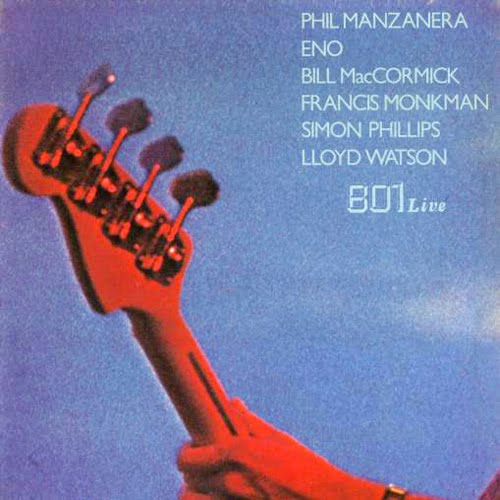
Y ya cerrando otra semana muy especial en el blog cabezón, recordamos un super proyecto formado por músicos de, entre otras bandas, Roxy Music, Curved Air y Matching Mole, unidos para un único y mágico disco. Y lo recordamos de manera muy especial porque esto que ahora nos trae el Mago Alberto es una remasterización como Dios manda de un clásico total, quizás uno de los mejores discos grabados por una agrupación en vivo, y además una agrupación formada por Phil Manzanera (Roxy Music, The Eden House, Quiet Sun), Brian Eno (Roxy Music, Harmonia, Fripp & Eno, etc.), Simon Phillips (Toto, Judas Priest, The Who, Pete Townshend, Jeff Beck, Mike Oldfield, Trevor Rabin, Gary Moore, Mike Rutherford, John Wetton, Asia, Stanley Clarke, Derek Sherinian, Jordan Rudess, Paul Gilbert, Michael Schenker Group, Hiromi Uehara, etc.), Bill McCormick (Matching Mole, Quiet Sun), un equipo de lujo para un disco muy especial que ahora revivimos para que lo disfruten en el fin de semana... "801 Live" es un hito dentro de la música contemporánea, y vive en los pasillos del blog cabezón.
Artista: 801
Artista: 801
Álbum: Live
Año: 1976
Género: Prog Related
Duración: 55:37
Nacionalidad: Inglaterra
Año: 1976
Género: Prog Related
Duración: 55:37
Nacionalidad: Inglaterra

Mago AlbertoY si habia un disco que merecía una remasterización era este, sí cabezonas/es, si bien habíamos publicado esta tremenda obra en su versión vinilo rip.y se escuchaba muy bien, la versión de hoy realmente hacen que se te erizen los pelos de la nuca, a propósito la versión vinilo tenía un salto en "Baby's On Fire", así que motivo más que suficiente para que puedan disfrutar de esta.
Para los que estan pagando su derecho de piso en La Escuelita de Moe, se van a encontrar con uno de los mejores discos grabados en vivo, y con una agrupacion donde sus integrantes estaban en la cresta de la ola, llámense Phil Manzanera, Brian Eno, Simon Phillips, Bill McCormick, y ellos se encargaron en producir un album que con el tiempo se convirtió en una gema dificil de definir, es que reúne en un solo disco magia y talento mezclado con una amalgama de misterio y estilo, logrando el que quizás sea uno de los 10 albumes que te llevarías a una isla.
La voz de Brian Eno le da un toque especialísimo y las pinceladas de Phil Manzanera en guitarra (que en estos años había consolidado su estrecha amistad con David Gilmour) le aporta el feeling que destila todo el disco, mientras que Simon Phillips con su atrevido doble bombo te presiona el cerebro de tal manera que quedas al borde del vómito, mientras Mac Cormick parece llevarte en andas con el bajo, y como una manta que te tapa y te lleva al mágico reino de los sueños está Eno con Francis Monkman en aterradores teclados.
Uno de los buenos discos de todos los tiempos aparece de nuevo en el blog cabezón, en su versión con arte nuevo y por si esto fuera poco con dos bonus tracks, además de que se SUENA TODO; así que si quedaste manija con la versión original acá tienen la oportunidad de aplacar el manijazo.
"801 Live" es un hito dentro de la música contemporánea, así que bueno volver a escuchar esta nueva versión, que podemos garantizar te va a dejar con los ojitos dando vuelta como chupetín paleta. 801 es como una gripe, te agarra de vez en cuando pero te deja de cama. Esto no se recomienda. Disco ESPECIAL si los hay!! Es obligatorio tenerlo.


Ladies and gentlemen, este es un verdadero incunable de la música. En plena crisis del petróleo a mediados de los años 70 las compañías discográficas llegaron al límite de comprar discos de vinilo para derretirlos y poder editar nuevos materiales. El proceso en sí era muy sencillo pero el resultado pésimo, al derretir estos discos se producía una degradación importante por la mezcla del papel, polvillo, y sustancias varias junto con el vinilo, copias de color casi gris, y un sonido carente de detalles eran la consecuencia de este vil proceso, por supuesto el LP te costaba lo mismo y las series de lujo eran más caras, o sea, el sistema capitalista de las multinacionales funcionando a full. Algunos sellos chicos cerraron sus puertas y otros eran absorbidos por los pulpos de siempre, se producían entonces, compras de licencias, fusión de compañías, etc. siempre en función de priorizar el negocio por encima de la calidad.Mago Alberto
Entonces sucedió lo siguiente, los catálogos de algunos sellos pequeños eran editados por las grandes compañías y únicamente imperaba el criterio del artista mas conocido, popular y que rindiera dividendos, sólo cifras frías de ventas y directrices sin experiencia, conocimiento y muchísima ignorancia comenzó a engendrarse globalmente. Ediciones muy pequeñas y mínimamente producidas estaban a tu alcance, ediciones que en el exterior eran de tapa doble, con fotos, posters o letras, eran editadas en Argentina en sobre simple con pésimo carton y pésima calidad en los fotolitos. Se perdieron también obras de muchísima calidad porque las tiradas de 500 o 1000 discos del pequeño sello nunca volvieron a ser editadas por los sellos¨importantes. Por dar un ejemplo: Polydor, que ofrecía un catálogo rockero muy interesante, fue absorbido por Phonogram y les interesó más editar a Demis Roussos que a Jimi Hendrix. Un pequeño gran detalle es que las series de los larga duración como la 8000 de Emi Odeon fue reemplazada por la 18000 y era un indicador de que esa nueva serie era la DESASTROSA, por supuesto, poca gente pudo descubrir este detalle y así sucedía con otras series de las otras compañias, así que aquellos fanáticos compradores de vinilo tienen una clave para ofertar en ML. cuando se ven seducidos por algun vinilo.
No se respetaba el arte original de tapa y diseño de algunos artistas y en algunos casos se llegaba a cambiar absolutamente todo, título, foto, nombre del disco. Les chupaba un huevo el verdadero sentido que le habia dado el autor, y sucedía así en cualquier ámbito, y era obvio también por el sistema implementado por el gobierno de turno, acordarse que en esa época estaban unos pulcros y buenos señores en el poder. Y comenzaba un sistematico plan para perjuicio directo de tu fuero interior, tu intelecto, tus propias ideas, tu poder de elección, tu derecho a crecer y desarrollarte con opciones varias.
Hubieron artistas y catálogos completos de música que jamás fueron editados en nuestro país, y parchado luego en los 80 con el furor del importado, es así que este grupo conocido como 801 fue editado aqui por Polydor en una tirada insignificante y de HORRIBLE calidad de vinilo.
Cha chan ta tan, he aquí la mejor version en calidad de sonido de esta obra considerada como uno de los mejores discos en vivo de la historia (wiki), y realmente es así, este es un disco para ponerlo al repalo y sumergirse en unos tremendos climas, por fin van a poder escuchar y disfrutar del doble bombo de Simon Philips (se lo considera el rey del doble bombo) el que piensa que el mismo es patrimonio del heavy-metal está equivocado, de los solos guilmurianos de Phil Manzanera, de los teclados de Brian Eno (el creador del "ambient"). Este disco te seduce desde el comienzo y no te da respiro hasta el final, como "Islands" de King Crimson, como "Close to the Edge" de Yes, y tantos otros, la version de "Tomorrow Never Knows" de Los Beatles es simplemente arrolladora, para quien no conozca este genial disco le aseguro una vuelta de rosca en su cerebro, para el que nunca lo pudo disfrutar con buen sonido voy a compartir su emoción, para el que no le gusta no sé que carajo hace en el blog de Moe.
Esta versión esta ripeada de vinilo seguramente con una terrible cápsula magnética, y un vinilo que el chabón lo habrá cuidado más que a su familia, una terrible placa de sonido y unas ganas de compartirlo sin igual, de los ripeos que deambulan por la net este es sencillamente ASOMBROSO, y que bueno que haya sucedido justamente con este disco.
Phil Manzanera, Brian Eno, Simon Philips, Bill Mac Cormick y Francis Monkman dieron forma a este proyecto denominado 801. Esta obra grabada en vivo en 1976 es otro inconseguible e ignorado de aquella época. Googleen a sus integrantes como tarea para el hogar. No se aprovechen de la buena voluntad de Moe.

Yo los fines de semana no publico cosas, a lo sumo actualizo algún link, pero el Mago Alberto me acaba de mandar este disco inconseguible y lo quería compartir antes incluso de terminar de escucharlo. Veamos de qué se trata, pero antes aclaro que son un manojo de genios en un disco que fue grabado en vivo en el crucero "Queen Elizabeth" (empecemos por mencionar esa rareza, ahora vamos por las otras):
Experimental rock band formed in 1976 after the temporary disbanding of Roxy Music by Phil Manzanera, Brian Eno, Bill MacCormick, Francis Monkman, Simon Phillips and Lloyd Watson. The group performed three critically acclaimed concerts at Norfolk, the Reading festival and London's Queen Elizabeth Hall. The final concert was recorded and released as 801 Live. A studio album; Listen Now - recorded at various dates during the mid 1970s - was released in 1977.
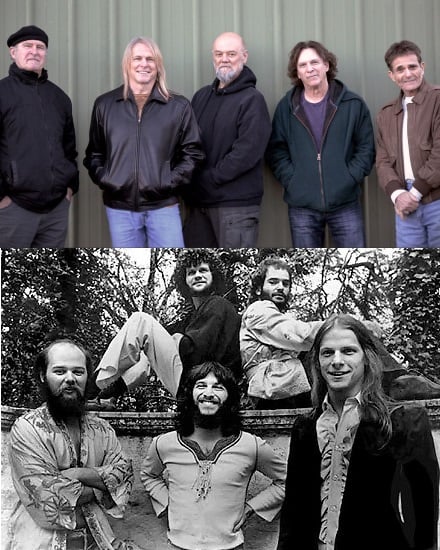
Y les mentí, aquí tienen otros cometarios de este disco:
This is a sophisticated musical project of great 70' s musicians , released in 1976 , by Virgin Records , in the middle of the Punk Era .Kostas
801 provided Roxy Music guitarist Phil Manzanera with one of his most intriguing side projects. Although the band only played three gigs in August and September 1976, this album captures a night when everything fell right into place musically. That should only be expected with names like Eno and Simon Phillips in the lineup. (Still, the lesser-known players -- bassist Bill MacCormick, keyboardist Francis Monkman, and slide guitarist Lloyd Watson -- are in exemplary form, too.) The repertoire is boldly diverse, opening with "Lagrima," a crunchy solo guitar piece from Manzanera.
I guess 801 Live is a bit of a cliche of Seventies rock: the supergroup, a statement uttered a lot in the wake of the Good, the Bad & the Queen album of late. The supergroup was possibly a shit idea when you think of the dire group based around Duran/Guns'N'Roses & Sex Pistols members, Keef's wino toss, Emerson Lake & Palmer or C, S, N & Y - whose output is dire and scared me off C, S, & N's work for years...Jasonaparkes
801, whose name stems from an Eno song not included, were a brief supergroup who surfaced in 1976 featuring Professor Eno alongside former Roxy Music colleague Phil Manzanera who had played on albums like Here Come the Warm Jets and Taking Tiger Mountain (RM were on hiatus for a few years, interesting to contrast Viva! to this live recording), and former members of Curved Air and Matching Mole. Names that are familiar to early 1970s albums, when Eno's name might be found alongside names such as Robert Wyatt, Phil Collins, Robert Fripp, Paul Rudolph etc...I guess it's in the spirit of the 1974 live album that featured Eno, John Cale, Kevin Ayers, Nico, Mike Oldfield et al. 801 Live was the band's third gig recorded at Queen Elizabeth Hall on the 3rd of September 1976 (...the live recording of it was technically advanced, one of the reasons why it's odd that 801 Live isn't mentioned in those endless lists when those endless lists are focusing on live albums - I think it's up there with the usual suspects: The Ramones' It's Alive, the Velvets' two volume '69 set, Crazy Horse's Live Rust, Magazine's Play, Live at Leeds, Kick Out the Jams etc...)
Manzanera's instrumental 'Lagrima' opens the album, an ambient instrumental equal to anything on Another Green World that stemmed from his solo album 'Diamond Head' (...the pre-Roxy Music outfit Quiet Sun are kind of a precursor and some songs here sound like Roxy without the Ferrymeister dominating things - as did 'Here Come the Warm Jets' which featured all of Roxy apart from the one who mates with the upper classes...). This seagues into 'T.N.K', a six-minute plus reinterpretation of the climax to 'Revolver' that was 'Tomorrow Never Knows' - a wild, wild song that along with 'Glass Onion', 'I am the Walrus' & 'Rain' is one of the Fab Four's greatest moments that haven't been dulled by over-familiarity or over-importance. Starting a live album with a song that pushed the boundaries (...why didn't those Anthology compilations have a three day version of TNK where Ringo locks into a groove 'Mother Sky'-style?...) is a bold move - the opening keyboards were the model for Gary Numan for his Beggars Banquet albums - by the end the track becomes both a bit jazz, and a bit tight - the Krautrock and Oblique Strategies elements not quite taking hold in Eno-world.
'East of Asteroid' opens with a wild collision of speedy drumming and keyboards before a wild guitar comes in, slipping from slick prog to avant gardness at will. I guess this was the point where Tangerine Dream gave way to Throbbing Gristle, a grey zone that probably confounds the strict prog/punk division we're taught in musicville these last few decades. 'Rongwrong' is a lovely song performed by Eno on lead vocals, evoking a similar feeling to a charming ditty like 'I'll Come Running' - it was written by Quiet Sun drummer Charles Hayward, who would later form This Heat - perhaps this is why TG or Scritti-with-Wyatt makes sense? Maybe this is why I came away with the conclusion that Genesis and Roxy and Can were as punk as anything following a browse of John Robb's Punk Rock Reader (...what the majority of punks appear to have been influenced by...)
The album flows wonderfully together, a tribal take on 'Sombre Reptiles' shifts out of 'Rongwrong' and forms a central part of the album stemming from Eno's key 1975 album 'Another Green World.' This is much more groovy than the original, Monkman's Fender Rhodes reminds you of Bitches Brew-era Miles or stuff like Mahavishnu Orchestra. One minute it sounds like something off 'Journey Through a Body', the next we're in noodly Weather Report-territory. A trip then...The version of 'Golden Hours' obviously can't come near the Cale-Fripp assisted studio take, but goes somewhere else - a subtle take on a song that still blows my mind. The latter part of 'Golden Hours' veers off into ambient-jazz noodling, this was probably one of the last times Eno dabbled in stuff like that - trading in 'The Lamb Lies Down on Broadway' for 'Tracks and Traces...'
It all becomes very Eno-tastic with a brilliant take on 'Fat Lady of Limbourg' from 'Taking Tiger Mountain' - the rhythm track is similar to that of Wyatt's 'Sea Song' & would recur on Scritti Politti's Wyatt-aided single 'The "Sweetest Girl" Eno still sounds miles ahead of Bowie and anticiptates many, many acts in the years that would follow. At about two and a half minutes in a brilliant bass/guitar groove comes in - this sounds like the start of all those acts Eno would produce in the next few years: Devo, Talking Heads, Ultravox! (the "now we checked out this duck...QUACK!!! " sounds very Cale). The tempo is upped even more with another rhodes-heavy reinterpretation of the Here Come the Warm Jets' track 'Baby's on Fire.' Along with the closing 'Third Uncle', this is the closest to the punk-post-punk-new-wave-etc sounds of the next few years. The song shifts into a minimal groove that is pure Devo as Manzanera goes off on one - parts of this may also shift into Watson's slide guitar, hard to tell. Bizarre that the Eno-trio wasn't on the original album!!! Their presence, along with the cover of 'Tomorrow Never Knows' on a Beatles-related-cd with Uncut, was the reason I bought it!!
Manzanera's 'Diamond Head' lets him explore territory between Eno and the Floyd, which certainly wouldn't have made it on 'Country Life' or 'Siren.' 'Miss Shapiro' is another lost pop song with Prof Eno at the helm, like a jazzier 'Thrill of It All' it is another reason why 'Diamond Head' should probably be explored in the mid-price world. The point where Eno begins to sing is just another one of those pieces of evidence we can use to throughly dismiss Josef-Ferdinand. 'Miss Shapiro' shifts into a cover version of The Kinks' standard 'You Really Got Me' (also covered over the next few years by Silicon Teens and Van Halen), which is fine if not radical. Finally, there's a take on 'Third Uncle', which featured Manzanera on the studio original - the opening is very 'One of These Days' - a speedy, angular piece that underlines Eno's forward-thinking approach. The guitar is as wild as McGeoch in Magazine (...Shot By Both Sides...), Levene in PIL (...Public Image...), or Rankine in Associates (...Paper House...). Just a shame the song is fading out, since I'm wondering how much longer the song went on and how it all turned out...
801 Live is a bit of an oddity, located in the mid-price realm and certainly not given much prescience in Eno's back-catalogue. There's much good here and certainly a record for Eno & prog-heads of the time and one that still sounds pretty wild these days...
They were the 801. Live.
Most live albums are of no more than token value. The promotional guff will claim that we should have been there but since we weren't we can grab this instead. It's an accommodating consumer service, I suppose, but all the bluster rarely justifies the release of material that's only documenting the minutiae of studio-to-stage transfer.Angus MacKinnon
"801 Live" is, like Bowie's "David - Live" or Dylan's "Before The Flood”, one of the exceptions that prove the rule. It's a properly creative live recording, on which songs differ radically from their blueprints.
801 were conceived by Roxy's Phil Manzanera & Co. as a summer of '76 spree and this is a useful summary of their operations. The set is a mixture of Quiet Sun material, Manzanera/Eno collaborations and a pair of gold-plated oldies thrown in for sheer enjoyment purposes. It's all been sensibly reshuffled and tightly edited to make an untroubled run onto record.
The selections almost obliterate their studio counterparts, in terms of tension and spontaneity. Although most amenable, Manzanera's solo album maintained a hedge-hoppingly low profile; potential excitement was often exchanged for painstaking exactitude.
Play these versions of "Diamond Head" and "Miss Shapiro" and you’ll get the picture. "Diamond Head" began life as a prettily florid melody. Here it's unsanctioned purpose and power. Mananera's guitar feeds greedily off Eno's treatments until he severs the connection for a final break, all metal and mobility.
"Miss Shapiro" has 801 wrenching themselves into a ritual frenzy as Eno snaps off chains of image-associated lyrics. In fact, Eno's singing is a real surprise. I've often found it strangely extraneous on his own records, whereas here it's completely attuned to the band's performance.
His neo-nasal delivery of "Baby's On Fire", deadpan intonation on the humourously motorik version of The Kinks’' "You Really Got Me" and philosophical baladeering on the restrained "Rongwrong" are all telling.
Manzanera's "Lagrima" opens, its rarefied melody quartering back and forth like an Andean condor, just guitar and electronics. Whereupon 801 take their breathless arrangement of Lennon-McCartney's "Tomorrow Never Knows" right up into Cloud Nine. A cirrus sweep of keyboards from Francis Monkman and Eno clears the way for Bill MacCormick's exuberant bass, Manzanera and Lloyd Watson's snickering guitars and Simon Phillips' splattered drums and hi-hat.
On your feet out of your head for zero-gravity nostalgia as Eno's vocals are tape-slowed into the mix. The initial momentum is maintained until closedown. "T.N.K." is stoned and immaculate, a peak of psychedelic revivalism.
The name of the 801 game is energy, and an energy undiluted through all the complex changes of "East Of Asteroid" or slipways of "Sombre Reptiles".
Watson’s slide is a satisfying foil for Manzanera's more acrimonious playing. MacCormick (whose bass is at once intricate and warm-blooded) and Phillips are the kind of rhythm section most bands can only dream about having aboard. Monkman's electric piano and clavinet balance out against Eno's more wayward contributions. The recording quality is excellent, even with both sides well over the 20 minute mark. It would he great to see 801 become a more permanent live fixture. I almost hope Roxy's sabbatical is extended indefinitely.
Who need Roxy Music, now anyway? They simply haven't cut it on album since the cataclysmic "Stranded". In addition, Ferry's solo work has improved noticeably since last autumn. His next record of original songs could well take on from where "Stranded" left off.
Roxy have become an ineffectual exercise in self-parody whilst 801 do what they do with unbridled enthusiasm.
Admittedly, the two units place their emphasis on very different aspects, but it seems pointless for Roxy to continue firing on less than one cylinder (and I doubt very much whether things will change even after a year's break) -- thus ensuring that 801 effectively cease trading as a band right now.
In 801 Manzanera has a really strong base on which to build. It's altogether far too good an offer for him to refuse.
THURSDAY September 2, 1976. British Left-Fielders' night out at the Queen Elizabeth Hall in London. It was 801's second and last gig (the other was Reading Festival). Phil Manzanera put together the six musicians, some of them from his former band Quiet Sun, specially for those two dates. Just for kicks.Vivien Goldman
As you might expect from musicians of Eno's and Phil's imagination and dedication, 801 were in no way a jamming band. Although the musicians don't play together on any regular formal basis, 801 are tight, responsive and as mutually sympathetic as any established gigging/recording band. Their music's a fruitful meeting-ground between Quiet Sun's experimental free-form jazz, Roxy's snazzy commercial bite, and Eno's highly personal games/adventures with words and music. The tracks are from Phil's solo 'Diamond Head' album, Eno's three Island solo albums, and Q.S's 'Mainstream.'
Drummer Simon Phillips dominates, free as jazz but militant (i.e. brisk, stirring, aggressive) as the best Jamaican drummers. Eno's vocals are always exciting. His delivery's polished and stylised, like Ferry's. Meanwhile Manzanera, notably on his instrumental showcase, 'Diamond Head,' reels off shimmering silken ribbons of guitar lines with Allman-esque fluid grace, or rocks ferociously.
Three cheers for the Island Mobile's crystalline recording they don't miss a lick. 801 produced, at Basing Street, and the sound's so immaculate that if it wasn't for tumultuous waves of applause phasing in and out, 'Live' could pass for a studio album. The unmistakeably live quality is due to the exuberance and spontaneous energy in the music, not, as in most live albums, the roughness of the sound. 'Miss Shapiro' judders with excitement.
Phil's eloquence is pure soul, Phillips' drums are frighteningly intense. Eno implodes into the song - first biting off words like bullets, then opening sensually in the middle break. His enunciation is clipped and English, as always, clear and tough as a diamond; then Phil's angry guitar slams the band forward into a menacing attack on the Kinks' 'You Really Got Me.' Eno sounds psychotic, as his keyboards bleep with infuriating deliberation; like an Oriental water torture, each note drips inexorably into the nerve centres.
All this, and rock 'n' roll too.
A memorable occasional band featuring the talents of Roxy guitarist Phiul Manzanera and vocalist extraordinaire Brian Eno. Though recorded in the confines of London’s Queen Elizabeth Hall, the set reflects the same atmosphere of the woodsmoke-filled air of the Reading Festival a few days earlier. The music comes from the two leaders’ solo albums and has a sense of the unreal about it, featuring knife-edge beats and strange world rhythms. Highlight of the whole affair is when they somehow manage to weld in the Kinks’ ‘You Really Got Me’ into their own ‘Miss Shapiro’ composition. Clever and clean.David Brown
Phil Manzanera escapes the restrictions of Roxy Music with a real gem and a great line-up of guests. In fact, the album is more a reunion of Manzanera's former band Quiet Sun and other friends. Musically this steers through the overlapping territory between prog/rock/pop, played extremely well (and remember this is live album from the early 70's). Tunes range from the covers (brilliant work outs of the Kinks "Really Got Me" and Lennon's/ Beatles "TNK" - Phil Collins' variant is sad in comparison), tracks from the only Quiet Sun album, early Eno and Manzanera's first, "Diamond Head". One of many surprises is that Eno sings, and with his pleasant even if limited half octave range, adds something to the better known tunes. Eno provide some of the keys, but the main man here is Francis Monkman, between Curved Air and Sky. Bill MacCormack on bass is between Quiet Sun and Matching Mole. And this is the first album on which we were exposed to the talents of Simon Phillips the drummer (who now ranks with Dave Weckl and Dennis Chambers as one of the most in-demand sessionists), there is nothing to fault - and is he 18 years old here? Phillips gives a thundering underpinning to all the tunes here.Dick Heath
The very best of Manzanera. Other of his albums may have individual tunes that surpass in quality, (e.g. Robert Wyatt singing "Fronteria" in Spanish) or have guests like Godley &Creme or the Finn brothers (between Split Endz and Crowded House), but for a complete and satisfactory package provided on every track of one album and from a tight line-up, "801 Live" cannot be beaten.
Here is, between the floods of Dream Theater and Franz Zappa reviews, an amazing, often overlooked progrock album. All eleven songs on this live record are based upon the sparkling chemistry between the different musical styles from six outstanding musicians.The one moment the focus is on wonderful, very moving electric guitar play from Phil Manzanera ("Diamond head"), the other moment, you're blown away by agressive bass work and cynical vocals ("Miss Shapiro"). The cover "You really got me" (from The Kinks) has been given an extra dimension, it sounds very lush and elaborated. The final song "Third uncle" is a very dynamic goodbey, what a rhythm-section featuring Simon Phillips and Bill MacGormick (also vocals). The contribution on keyboards from Eno and Francis Monkman are often exciting and Lloyd Watson (also vocals) delivers some great slide guitar. AN EXCELLENT ALBUM!Erik Neuteboom
Excellent live album by this one shot project led by legendary prog icon Brina Eno. I was caught by surprise when I saw it being released in Brazil: I could not believe so many stars in the cast! Phil Manzanera (Roxy Music), Francis Monkman (Curved Air) and Bill McCorminck (Quiet Sun) in the same line up? Wow! And the music inside does justice to their fame! Also I must note that although drummer extraordinaire Simon Philips was not very well known at the time (he was only 18), he was already one of a hell fine prog drummer (any doubts just listen to the wonderous East Of Asteroid and see how few drummers could actually pull off the kind of drumming this song demands).Tarcisio Moura
801 live may not be perfect and I think the CD version would benefit with some extra tracks (I believe they played more than the 10 songs included on the original vinyl release). But it´s great! There are many highlights: their interpretation of the Beatles Tomorrow Never Knows is absolote awesome, one of the best Beatles covers I heard. Sombre Reptiles is better thean the studio version and I onlyt wished they played a little longer (I loved the way is started from merging at the end of the previous track, Rongwrong). Diamond Head and Third Uncle are other ones that I like the live renditions here more than the original ones.
The only real downside of this album is their version of the classic Kink´s track You Really Got Me. But stil I think it´s allright, it doesn´t bother me since it´s a short one. 9 out of 10 is an excellent score anyway! The album may be a little short for taday´s standards, but it is worth every note in it.
Very well done, played and produced. What a night for the fortunate ones who were there! Highly recommended
I recall that sometime in the eighties, in the record store I managed, I read in one of the mainstream music journals that this album was "thr greatest live album ever recorded". Is that so? Not in my opinion. But for an album like this to garner the praises of one of those industry stooges was quite a feat.Scott
Despite the high praises mentioned above, this is one fantastic album. The band on this night was incredible, led by spectacular performances by the rhythm section of Simon Phillips and Bill MacCormick. The songs are great, nearly all much better than the studio originals. And even the cover songs, The Beatles' Tomorrow Never Knows and The Kinks' You Really Got Me are show stoppers.
My only complaint is that instead of playing the Quiet Son songs East Of Echo and Mummy Was An Asteroid, Daddy Was A Small Non-Stick Kitchen Utensil (there's a song title for you) in their entirety, they blended them into East Of Asteroid.
I own both the original and expanded editions. While the extra songs Golden Hours and The Fat Lady of Limbourg are good, they are not quite as good as the rest of the album. But I'm not complaining.
Great live debut of short-lived Phil Manzanera (ex-Roxy Music) project. Almost all-stars line- up,including Brian Eno,Bill MacCormick (Quiet Sun), Francis Monkman (Curved Air,Sky),Simon Phillips (played everywhere) and Lloyd Watson on slide guitar.Slava Gliozeris
From the very first sounds you feel what a great music is! Very rich bass line, melodic, but never too sweet songs, very intelligent Manzanera's guitar line. Mid-tempo songs with perfect vocal. A bit dreamy atmosphere. The music itself is mix of bass driven jazz fusion, some art- rock and some early Eno (before ambient) pieces. Alltogether sounds fantastic!!!
Recorded live, album looks more as studio recording. Sound quality is perfect and music complexity is at the level of studio work. Lp's side A is absolute gem. Second side is good, but not so concentrated. But all album is great!
For me this work, near UK debut album, is two albums illustrated greatest progressive rock level somewhere in late seventies.
I will not ever forget my first encounter with this album. It was on 8-track. Putting the medium aside it made a huge impression on me. I was just getting into Roxy Music and this one has Phil Manzanera and Brian Eno on it as the primary artists. If you don't care for Bryan Ferry's earlier vocal stylings, not to worry, he's not here. This is pretty much an Eno/ Manzanera affair. Eno is also very prominent and for the remastered version, there are extra tunes are from Brian Eno's solo albums.Brian S. Lindsey
You get a couple of covers. The Beatles Tomorrow Never Knows and the Kinks You Really Got Me done quite well. Brian Eno may have had enough of Roxy, but he kept working with Phil and they did make some really good music. This album was one of their best collaborations. When it comes to live albums where the tracks distance themselves from their originals, this one can't be beat.
"When things get bad, I can always turn into a cloud, if the wind will blow me there."
Y les podría copiar mil comentarios más, pero hasta acá llegamos, recuerden, estoy en el fin de semana...
Disfruten y agradezcan al Mago Alberto!
Lista de Temas:
1. Lagrima
2. T.N.K. (Tomorrow Never Knows)
3. East Of Asteroid
4. Rongwrong
5. Sombre Reptiles
6. Golden Hours (bonus)
7. Fat Lady of Limbourg (bonus)
8. Baby's On Fire
9. Diamond Head
10. Miss Shapiro
11. You Really Got Me
12. Third Uncle
1. Lagrima
2. T.N.K. (Tomorrow Never Knows)
3. East Of Asteroid
4. Rongwrong
5. Sombre Reptiles
6. Golden Hours (bonus)
7. Fat Lady of Limbourg (bonus)
8. Baby's On Fire
9. Diamond Head
10. Miss Shapiro
11. You Really Got Me
12. Third Uncle
Alineación:
- Phil Manzanera / guitar
- Brain Eno / keyboards, synthesiser, guitar, and vocals
- Lloyd Watson / Slide Guitar and vocals
- Francis Monkman / Fender Rhodes and clavinet
- Bill MacCormick / bass and vocals
- Simon Phillips / drums and rhythm generator


Este disco lo coloque en Junio del 2009, en un foro al cual perteneciamos y seguimos perteneciendo, y nadie le hizo caso. Es Excelente esta Banda una de mis favoritas. Saludos
ResponderEliminarpor favor podes resubirlo
ResponderEliminar? , muchas gracias por el trabajo que haces !!