


Uno de los discos pioneros del rock progresivo compartido por Esteban, para disfrute de todos los cabezones. El segundo disco de Family, que no podía faltar en el blog cabezón.
Artista: Family
Artista: Family
Álbum: Family Entertainment
Año: 1969
Género: Progresivo ecléctico
Duración: 39:49
Nacionalidad: Inglaterra
Año: 1969
Género: Progresivo ecléctico
Duración: 39:49
Nacionalidad: Inglaterra
Lista de Temas:
1. The Weaver's Answer
2. Observations From A Hill
3. Hung Up Down
4. Summer '67
5. How-Hi-The-Li
6. Second Generation Woman
7. From Past Archives
8. Dim
9. Processions
10. Face In The Cloud
11. Emotions
1. The Weaver's Answer
2. Observations From A Hill
3. Hung Up Down
4. Summer '67
5. How-Hi-The-Li
6. Second Generation Woman
7. From Past Archives
8. Dim
9. Processions
10. Face In The Cloud
11. Emotions
Alineación:
- Roger Chapman / Vocals
- John 'Charlie' Whitney / Guitar, Vocals
- Jim King / Saxophone, Flute
- Rick Grech / Bass
- Rob Townsend / Drums
With:
The Heavenly Strings / Strings
Tony Cox / Additional Arrangements
- Roger Chapman / Vocals
- John 'Charlie' Whitney / Guitar, Vocals
- Jim King / Saxophone, Flute
- Rick Grech / Bass
- Rob Townsend / Drums
With:
The Heavenly Strings / Strings
Tony Cox / Additional Arrangements
Seguimos con este festival Family ofrecido por el Maestro Cerioni a través del blog cabezón.
Seguimos con las palabras de Esteban:
Más exitoso que "Music in a Doll's House" sería “Family Entertainment”, un álbum que alcanzaría el número 6, producido por John Gilbert.Esteban Cerioni
Estas ventas y sus celebrados conciertos convirtieron al grupo de Chapman y Whitney en uno de los principales números del momento en Inglaterra de ese período pero el bajista original, Ric Grech, decide dejar el grupo seducido por el llamado para ser miembro de Blind Faith, supergrupo formado por Eric Clapton, Steve Winwood y Ginger Baker. Grech lamentaría esta decisión ante lo efímero que resultó este proyecto aunque luego le abriría las puertas para ser integrante de la formación mas tardía de TRAFFIC junto a Winwood y luego con los Bee Gees (que aún no entraban en la onda Saturday Night Fever). Había abandonado a Family en medio de una gira por Norteamérica pero el reemplazo en las cuatro cuerdas llegó con John Weider, también violinista (como Grech) además de bajista recomendado por Peter Grant (el manager de Led Zeppelin) y la gira pudo ser concluída. Weider, que había sido integrante de los NEW ANIMALS de Eric Burdon, estaría presente en los dos álbumes siguientes. Con esta formación, Family apareció el 5 de Julio de 1969 en el concierto de los Rolling Stones en el Hyde Park. Ese mismo día debutó King Crimson, cuyo destino estaría ligado al de Family.
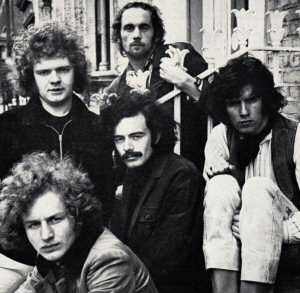
Family no parece un grupo formado a mediados de la década de los sesentas, ni en el Reino Unido, de donde son oriundos, ni en Norteamérica, nunca estuvieron en la mainstream o corriente principal y de no ser porque usaban instrumentos eléctricos y marcaban ritmos inequívocamente "roqueros", nadie los hubiera etiquetado como un grupo de rock.Ariel Martínez
Family es otra de esas bandas inglesas de fines de los sesentas y principios de los setentas que inexplicablemente están injustamente olvidadas, o en el mejor de los casos, no suficientemente reconocidas, habiendo hecho discos de gran consistencia, calidad y originalidad, teniendo en sus filas a una buena cantidad de músicos sobresalientes y haber creado un concepto original, factores todos que, por lo regular, convierten a una banda de rock en clásica e inmortal.
Family se creó en Leicester por la iniciativa de un grupo de estudiantes de arte y en su período de conformación tuvo varios cambios de personal, para 1968, año en que grabaron "Music in a Doll House", su extraordinario disco debut, celebrado por los críticos más exigentes, pero poco vendido y olvidado, sus miembros eran: Roger Chapman, cantante, armonicista y saxofonista; John Whitney, guitarrista; Jim King, que tocaba saxofones, armónica y cantaba; Ric Grech, en bajo, violín, cello y voz y Rob Townshend con las percusiones.
"Family Enterteinment" su segundo disco y con los mismos músicos, es también una joya de principio a fin, con el quinteto, desarrollando una música que, aún en el contexto expansivo de esos años, era muy rica en la composición de las piezas, que no se limitaban al rock, sino que tenía pasajes muy variados donde se asomaban las músicas tradicionales del Reino Unido y la música "culta", ires y venires de unos escenarios a otros, con instrumentación muy variada y un vocalista (Chapman) que tampoco goza del reconocimiento que merece, con la fuerza y emoción de Joe Cocker y un timbre parecido al de Mike Harrison de Spooky Tooth, era un cantante fuera de serie.
Un vistazo a la alineación o músicos que participaron en la grabación, da una buena idea de la riqueza instrumental y de las posibilidades de una banda con músicos audaces y talentosos usándolos.
El grupo británico psicodélico y progresivo Family debutó en el año 1968 con el magnífico álbum “Music In A Doll’s House”, un disco producido por David Mason (componente de Traffic). Su segundo álbum fue “Family Entertainment” (1969), otro gran LP con Glynn Johns en la producción.AlohaCriticón
En el disco, reeditado por Reprise, suenan temas como “Summer 67”, composición instrumental de Charlie Whitney con arreglos de cuerdas de Tony Cox evocando con rasgos orientales el célebre “verano del amor”, “The Weaver’s Answer”, uno de los temas claves del LP, prog-rock con flauta, saxo de Jim King y un bajo funk de Ric Grech co-escrito por Whitney y Roger Chapman con preguntas existenciales desde la vejez, o “Face In The Cloud”, estupenda balada psicodélica dream pop, lisérgica-onírica, compuesta por Grech con guitarra acústica, sitar... en un viaje extraño por rumbos desconocidos hacia la eternidad a través de montañas, de nubes con ojos de mujeres... Disco recomendable.
Tal vez conozcan a los británicos progresivos con onda (?) de Family por aquella vibrante y sorprendente presentación en vivo que alguna vez Peter Capusotto mostró en uno de sus momentos musicales. Más allá de aquel gran momento -con la que tal vez fue su canción más conocida, el épico relato “The Weaver’s Answer”- la verdad es que Family fue una de las bandas más interesantes y originales del rock progresivo británico. Por empezar, porque antes de formarse todos sus integrantes tenían bandas (y entrenamiento formal) en música negra, especialmente R&B. Esto, por supuesto, les daba un sentido de la rítmica que otras bandas progres (más fundadas en la música de cámara) no tenían, una pulsión más viva. En segundo, porque su primer álbum Music In A Doll’s House -producido por Steve Mason de Traffic- al que le fue muy bien, salió en 1967, cuando a ambos lados del Atlántico la idea de rock progresivo no estaba siquiera en ciernes ya que la psicodelia lo copaba todo.demidiscoteca
Esto, obviamente, los hace pioneros -junto a grupos como King Crimson, Procol Harum o The Moody Blues- del sonido que luego, ya entrados los ‘70, ayudarían a formar bandas más formalmente progresivas como Yes o Genesis. El que les presento es su segundo y más interesante álbum, Family Entertainment, último con su alineación original y, claro, el que tiene “The Weaver’s Answer” como canción de apertura. Pero ojo que eso no es todo lo que hay, claro. En principio, porque este sexteto estaba en una forma extraordinaria: la voz del cantante Roger Chapman como la habilidad compositiva y multiinstrumental de Charlie Whitney son fundamentales para el álbum, tanto como los del gran bajista Ric Grech (luego tocaría en Blind Faith), el piano de Nicky Hopkins (sí, el de los Stones) y el aporte de Jim King en el saxo y de Rob Townsend, un pulsional baterista. Además están las vibrantes, variadas, texturadas e interesantes canciones que mezclan balada, jazz, rock, blues y mucho más.
Uno de los discos pioneros del rock progresivo, antes de que se volviera aburrido y megalómano.
Y vamos con algunos comentarios en inglés:
From the blues revival, through psychedelia to progressive. This is the first Family's album that can be defined progressive, even if some tracks are not. The starting song, "The Weaver's Answer" has influenced lot of other artists and it's possible to find its echoes in some other groups, in particular "Banco del Mutuo soccorso", whose vocalist has the same "vibrations" of Chapman's voice. It's a mix of varoius genres, from the rock and roll of "2nd generation woman", to the arab- waltz of "Summer of 67". "Processions", "Dim" and "Hhow Hi The Li" in my opinion are the best tracks. The strength of this album is its variousness, and Chapman's voice is one of the best in the all time prog scenario. 4 / 5 starsLuca
Unlike his experimental, psyhedelic predecessor, this more mature album represents Family as a tru progressive rock pearl. Numerous brilliant songs : from the A side opener ''Weaver's answer'' followed by four tracks full of Family typical energy, to B side unexpected hard rocking starter ''Second generation woman'' to a sudden, total contrast - few gentle, reflective songs , among them ''Processions'' my personal favourite. At the time this album was released it was lauded by public and critic as well. Today it still sounds so good, and to quote one Procol Harum title , shines on brightly.Berislav Surmanovic
After a number of years of making a name for themselves in the UK, the mythical Art- rock group Family might have had a bit of trouble bettering their outstanding debut, but yet they proved naysayers wrong and released an even greater sophomore album, the great "Family Entertainment".Charles
For the album's opener alone, the symphonic classic "The Weaver's Answer" this song is worth the price of the CD alone. The song as excellent as it sounded, would become much harsher and lengthier in a live setting and would eventually wind up become Family's magnum opus, surviving the rest of the band's career. Other great songs on "Family Entertainment" includes concert staples "Observations From a Hill", "Hung Up Down" and "Processions" and the country themed beauty of "Dim".
It is while touring for "Family Entertainment", that after being courted by sister rival band Traffic's Steve Windwood for Blind Faith, multi-instrumentalist Ric Grech would leave the band on the wake of the Family's first trip to the US, leaving the band to search for a similar type muiscian, and humbling the band's first tour abroad.
Weaver of life let me look and see, the pattern of my life gone by shown on your tapestryBob McBeath
Let's be clear up front, this album is absolutely essential. Why? Because it includes the unbelievably magnificent "The weaver's answer". This song is one of those masterpieces which comes along only when the planets are correctly aligned and a flash of inspiration is sent from the heavens. The song is perfect in lyric, melody and performance. It builds through Roger Chapman's inspired vocal and some superb violin to a climactic and dramatic conclusion. It is, to put it simply one of the fiest peices of music ever recorded.
I'd love to just stop the review at this point and put up a five star rating, but this is an 11 track album. Much has been said about the production of "Family entertainment", the band's second album, over the years and it is true that there are deficiencies in that department. That however should not blind us to some highly enjoyable material.
"Observations from a hill" is clearly not sung by Chapman, but the credits are unclear as to who the vocalist is. Following "The weaver's answer" is going to make any song sound inferior, but "Observations.." is a rather prosaic number all the same. "Hung up down" is a stronger, more conventional Family song, with a fine performance by Chapman.
"Summer '67" is a Charlie Whitney instrumental with an eastern flavour, reflecting the mood of that period. It makes for a pleasant interlude piece. "How-hi-the-Li" is a politically charged song focusing on China and the East, with rather uninspired lyrics such as We only wanna break the chain of society Put the people back on the road to reality We only wanna turn the whole world on "Second generation woman" sounds completely out of place, not just on this album, but in the Family catalogue as a whole. The song is a Beatles style rock and roll number, perhaps with singles potential. Rick Grech takes lead vocal and adds some violin too, but while the song is a credible piece of pop, it just does not fit at all here. Fortunately, normal service is resumed with the quivering vocal of Roger Chapman on "From past archives" which features a bizarre mix of harmonica, barroom piano, clarinet, orchestration and Harpsichord. It is about 15 songs in 3½ minutes!
"Dim" also features harmonica, but in a lighter semi-country atmosphere. "Processions" has a retro 60's pop feel, the reflections of boyhood conjuring up nostalgic images. Had this been recorded in the mid 1960's, it would probably have found its way into the pop charts. The sitar based Rick Grech song "Face in the cloud" features a lead vocal by him. Why the band should insist on sharing out the vocal credits when they have in their line up the incredible and unique talents of Chapman is something of an enigma. Perhaps it was a futile attempt to prevent Grech from moving on to Blind Faith, something he announced would do before the tour to promote the album had started.
The closing "Emotions" is an atmospheric song with a strong arrangement. That arrangement in many ways carries the song, which is melodically average.
"Family entertainment" is far from being a one song album. While "Weaver's answer" is undoubtedly the jewel in the crown, it is supported by a creditable range of decent songs. The progressive influences are largely kept in check in favour of a more pop orientated feel, but the diversity of the content more than compensates for this.
(You'll have to excuse me if I attempt to delve into the philosophical motives behind some of the instrumentation on some of the songs. Other bands have chroniclers to explain WHY they did what they did when they did it, I somehow doubt Family has anyone like that. Guess that's me.)The Whistler
It seems that while Ian Anderson was still singin' the blooz (not that he's ever stopped), Roger Chapman and his ragged gang of mobsters had already written Thick as a Brick! Alright, probably not true, but I swear that between "The Weaver's Answer" and "Processions," you have the whole of Gerald Bostock's life's philosophy.
This album is a kind of letdown after Music in a Doll's House. I mean, in several ways, it's an improvement. The songs are a little more, uh, "Family oriented," and the musicians all play tighter and more naturally. Plus, the quality is cleaner here, Doll's House sometimes sounded a little muddy. Oh, and, the cover's way cooler. They're spoofing the Doors' "Strange Days," am I right?
However, the near immaculate consistency of Doll's House is gone on Family Entertainment. The songs still flow naturally, but sometimes without much connection. And there's filler! I swear it, there weren't no filler on that last one. However, in reality, it's not much of a drop; what Entertainment lacks in consistency, it makes up in pure song power.
Simply put: you cannot hate an album that opens with a number like "The Weaver's Answer." Okay, wait a minute, actually, you probably can. If you hate all things Family; namely, that weird blend of the artsy and the rootsy, multiple instrumentation almost to the point of uselessness, and of course, Roger Chapman on vocals. As for me, I love all that crap! Bring it awn!
"The Weaver's Answer" opens with a little hushed, mystical mantra, but very quickly becomes a driving, somewhat trippy, somewhat acoustic march. Love that rhythm section. Then there's pretty much some soloing, saxophone and cool, watery guitar, and then back to the march again. I LOVE Chappo here; as he continues listing his life's events to the "Weaver," wondering how much impact they've honestly had on the tapestry of the universe, he gets angrier and angrier, spitting out the lines with spine tingling honesty. And all the little flute and electric guitar noises that comes from...wherever? Great. Needless to say, it all collapses in on itself, and we start back at the beginning again. Point is, this song rocks. Hard. It's pretty much brilliant, and I can think of a few "real" progressive bands that would kill for something of its effortless quality. Best song on the album? You better bet.
"Observations From a Hill" is a nice folksy, acoustic number, but I'm less fond of it. Perhaps because Ric Grech is singing the verses? He reminds me of Geddy Lee on that one; you listen to it and tell me otherwise! "Hung Up Down" brings us back to the patented Chappo growl, and the chorus is actually pretty good.
"Summer '67" is a highlight for sure. It's an instrumental, but don't look for any summer of love references here. No, this is a bouncy folk chorus traded off with a decidedly Eastern themed verse, and I DON'T mean sitars and crap, I mean real Middle Eastern violin. Who was doing that at the time? "Kashmir" wouldn't come out for another half a decade. "How-Hi-the-Li" is just nutso. Which is a good thing. It's a sort of trippy groove (and listen to the first verse, gotta love the lyrics).
"Second Generation Woman" is probably the least attractive tune on the album, a difficulty we really didn't have to encounter on the first record. It's a rough rocker, but it's also melodyless. Pity, the soloing is probably the best on the album. "From Past Archives" is one of the weirdest numbers, in a way. I mean, the rootsy harmonica and the medieval harpsichord? And then the jazzy sax soloing? It's a cute number, don't get me wrong, but when the violin comes in it seems a little overstuffed. Great vocals though.
Now "Dim" is a truly catchy harmonica and banjo driven rocker about the dangers of...uh, loving with the lights off? Or maybe the dangers of loving with the lights ON. Point is, it's fun. Nice soloing, and I love the descending riff. And "Processions" is the last great number on the album, a truly gorgeous tune. It's the downbeat little tale of a kid on the beach. Tender vocals and sax, and that piano that comes in for the second verse represents water (change?), doubtlessly, but just dig those classy little arpeggios! And the brief coda? Once again, gorgeous.
The final two numbers are...I dunno, unnecessary? "Face in the Cloud" if a pure filler tune, seemingly designed around that damn sitar! What, were you obligated to have a sitar tune in '69 or something? Regardless of sitars, the tune itself is fairly lifeless. There's nothing wrong with "Emotions," but it's also a little...lifeless. It's a nice enough song from a technical point of view, the little ascensions played with the rhythm and blues melody, and is that a steel drum in the background? Still, it feels a little...fake somehow, don't you think it would have been better to close with "Dim" or something?
So you see what I mean this being a letdown from Doll's House? One thing that might not be so obvious is the variety; since this album is more smoothed out, it also means that Family have stopped running in all directions trying to find something to grab onto. Of course, Family are a naturally varietous band, so eclecticism lovers need not worry that much.
But more pressing is that Doll's house didn't have any filler like "Emotions" or "From Past Archives" on it, nor anything just plain bad, like "Second Generation Woman." Of course and on the other hand, it didn't have anything gorgeous like "Processions" or anything...well, ANYTHING like "The Weaver's Answer" on it neither. In fact, I'm having some trouble thinking of a lot of other records that have something like "Weaver" on 'em too.
In the long run, what am I talking about anyway? For one thing, Doll's House was so near to perfection it would have taken a Thick as a Brick to improve upon it anyway, and besides, Entertainment is still as good as some bands are ever capable of doing. And I think that everyone needs to hear "Weaver's Answer" at least once in their life.
Y seguiremos con la historia de Family en un ratito nomás...


Download: (Gracias a Esteban)
ResponderEliminarhttp://adf.ly/1RMDdy
Grato pelas resenhas.
ResponderEliminarGracias Gran disco dificil de buscar con roger chapman
Eliminar