

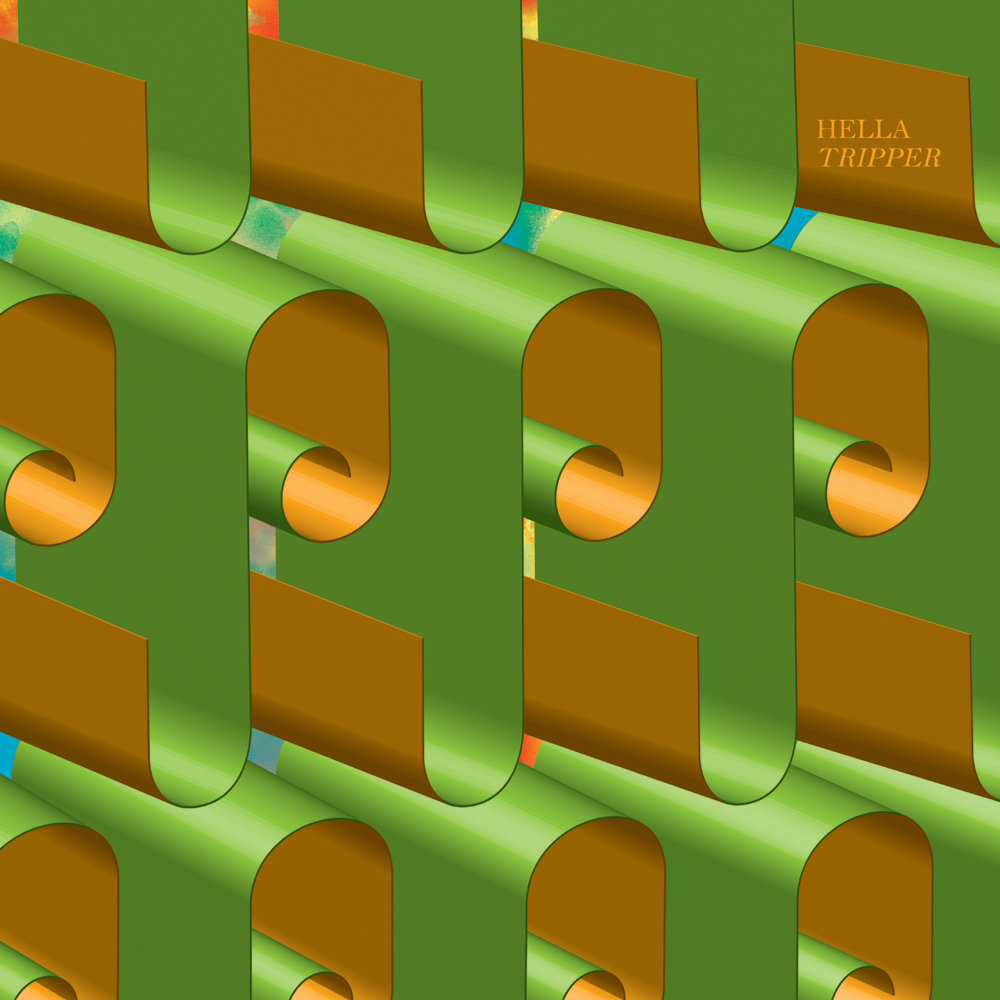
Comenzamos la semana a lo bestia, con un disco que se las trae de un virtuoso grupo yanky que cultivan un desbordante math rock emparentado por un lado con el post rock y por otro con el salvajismo del punk. Sea como sea, a veces es muy difícil catalogar algo sobretodo de éstas características, así que mejor lo escuchan ustedes...
Artista: Hella
Artista: Hella
Álbum: Tripper
Año: 2011
Género: Experimental Math Rock
Duración: 39:33
Nacionalidad: EEUU
Año: 2011
Género: Experimental Math Rock
Duración: 39:33
Nacionalidad: EEUU
Lista de Temas:
01. Headless
02. Self Checkout
03. Long Hair
04. Yubacore
05. Netgear
06. Kid Life Crisis
07. On The Record
08. Furthest
09. Psycho Bro
10. Osaka
01. Headless
02. Self Checkout
03. Long Hair
04. Yubacore
05. Netgear
06. Kid Life Crisis
07. On The Record
08. Furthest
09. Psycho Bro
10. Osaka
Alineación:
- Spencer Seim / guitar
- Zach Hill / drums
- Spencer Seim / guitar
- Zach Hill / drums
A partir de la década de 2000, cuando aparecieron géneros musicales que tenían estilos nombres claros y precisos, como por ejemplo "post-rock" o "math-rock". En ese momento, había un grupo que en el under mundial se comenzó a conocer y se llamaron Hella, que comenzaron a lanzar algunos álbums memorables que el Mago Alberto amenaza con traer, tal es el caso de su disco debut del año 2005: "Hold Your Horse Is". Lo hicieron a partir del math-rock, con cosas que los emparentaban con grupos como Don Caballero o Battles, pero con cierto grado de salvajismo innato, rara rítmica, una precisión mortal, temas basados a partir de la estructuración de diferentes escalas que mutan en medio del caos contenido y ordenado.
Pero vamos con el comentario del Mago, que es quien trae el disco:
Quizás el oído como el resto de nuestros sentidos, tenga un desarrollo lento y complejo, no sólo para entender la lengüistica sino también en el aspecto técnico musical, y hacia allí nos lleva este cuestionamiento, un lugar privilegiado, donde la comprensión y el entendimiento te lleva hacia los planos incomprensibles de la seducción, lugares y planos repletos de complejidades que fueron mutando en nuestros oídos a traves del tiempo, seducidos quizás por las estructuras del más rebuscado progresivo, del intrincado jazz-rock, u otros géneros afines.Mago Alberto
Por tal motivo ese desarrollo auditivo te lleva a comprender el virtuosismo de esta banda. Banda compleja y virtuosa si las hay, un género que muchos lo encuadran en el matemático math pero este caso es muy particular, porque aún deslizando en algunas canciones todos los yeites del math, estos muchachos llevan su música hacia un terreno más elevado, me recuerda muchísimo los excéntricos proyectos de Yoshida, en Ruins o en Zletovsko. Pero aquí hay muchísima personalidad y buen gusto, además de loquísimas y enfermas escalas musicales. Los trabajos de Hella parecen llevar un sello particular y si investigamos algunos videos en You Tube veremos que la escena de estos californianos es acorde a lo extravagante de su música. Y que conste que son un dúo.
Virtuosismo es lo que se me ocurre como cualidad primera, y es allí donde se deposita todo este trabajo, quizás cerrando una ecuación que iniciaron allá por principios de los 2000 este trabajo del 2011 cierra un camino repleto de cualidades hermosas.
Hoy en los comienzos del siglo XXI nos encontramos con grupos muy novedosos, tal el caso de Hella, pero en esta avanzada podemos mencionar también a Fat32, grupo del cual estaremos posteando algo, y del cual podemos dar fe de un sonido y unas estructuras realmente futuristas.
Los Hella tienen varios discos y comenzamos por Tripper, postearemos también el doble, y si pinta el tiempo también los primeros, pero debo aclarar que este tipo de música es para aquel oído abierto y desarrollado, es decir sólo para cabezones avezados y enfermos.
Y bueno, yo creo que no hace falta hablar mucho más teniendo a mano el disco, cualquier cosa, aquí tienen el comentario de otro de nuestros conocidos de andanzas musicales:
Hella ha regresado a su formación original, y en mi opinión muy personal, la única que debió existir. Es decir, este nuevo trabajo se regresa a las muy intrincadas y virtuosas, más bien dicho imposibles técnicas y bases de los primeros dos discos.Master Kob
Esta es definitivamente una nueva obra maestra donde el dúo guitarra-batería actúa de una forma completamente funcional y potencialmente sincronizada. Sin duda un candidato gigante no sólo a disco del año, sino como toda una referencia de la música superior y esforzada del nuevo milenio. Imprescindible desde cualquier punto de vista, recomendación generalizada para todo oído en busca de la máxima complejidad musical, y pueden comprobar mis palabras si siguen el enlace de su bandcamp, donde incluso pueden pedir la mejor versión del disco a un precio razonable.
Y como no podía faltar, los comentarios en inglés para que puedan leer todos los cabezones que no hablan español (ojo que son varios) y quienes quieran practicar su inglés:
Though they’ve performed with a number of different lineup combinations, Hella has always been drummer Zach Hill and guitarist Spencer Seim at the core. Though a fairly conventionally sounding core, Hill and Seim are not your conventional guitar/drums duo. Rather than merely keeping time, Hill’s diverse styles range from the clattering lurches he showed guest improvising on Joan of Arc’s last disc, Oh Brother, to the insane punk mashing he displayed for his brief tenure backing Nathan Williams on Wavves. Seim’s inventive, gleefully insane shredding can similarly be seen elsewhere, notably in his solo work as sBACH and drumming with Nintendo cover band The Advantage.Adam Kivel
Tripper, though, finds the Sacramento duo ditching their three other band members and returning to their noise rock roots, spazzing out together until they find something that fits. That willingness to hit the wrong notes in order to find interesting new combinations, to experiment with patterns and rhythm shines through most on the disc. Which is to say, those looking for easy hooks need look elsewhere. Like their “weirdo drum and guitar” brethren Lightning Bolt, there’s something inherently confrontational about Tripper, though where those Providence dudes get metal, Hella delve into something proto-free jazz, skipping from time signature to time signature, leaving clusters of sound in their wake.
On opener “Headless”, a seemingly formless mess of rumbling sound wrenches itself into a riffy, technically impressive interlocking groove. The cleverly titled “Self Checkout” is aptly indulgent, as well as recklessly self-run, Seim’s chords swelling and crashing like insane metallic waves as Hill’s unstoppable kit-clashing propels the thing forward. Later, the similarly pun-y “Kid Life Crisis” features a groovy, Black Dice-reminiscent electronic percussion loop at its opening, though it unfortunately dashes it abruptly before returning to more of the same. While it’s apparent that Hill and Seim are insanely talented musicians willing to try anything, they seem to return too often to a running standard. There are enough flashes of brilliance on Tripper to make it a great album, but unfortunately enough little moments like that electronic groove on “Kid Life Crisis” to show that there’s plenty more for them to reach for.
Over a stop-start decade-long career to date, Hella’s chaotic energy has resolutely pinned the Sacramento noise-rockers out as an outfit unconcerned with commercial success. But this fifth album marks a subtle sea change of sorts, twisting snaking experimentalism into some of their most palatable shapes. Yet, at the same time, the first Hella record since 2007's There's No 666 In Outer Space refuses to lose the kinetic charms that have made them a cult concern.Adam Kennedy
The old cliché about less is more rears its head, with Hella now pared down to a twosome after previously swelling to a quintet, both live and while recording their previous LP. The core that founded the band remains: guitarist Spencer Seim and drummer Zach Hill. The former continues to coax fretboard wizardry from eccentric custom-made axes; the latter – sometime sticksman with Wavves, plus Deftones and The Mars Volta side projects – is an impressive study in perpetual motion. His idiosyncratically hectic technique ensures more scattershot beats per minute than an arrhythmia sufferer's ECG reading.
Evidence of their increased ability to extricate melody from madness appears early in the triumphant refrains of opener Headless. The twosome wrings beauty out of anarchic aural fragments, in a similar manner to confirmed Hella devotee/Hill collaborator Marnie Stern. It's a pattern repeated across Tripper, to the extent that it's only by the conclusion of its 10 tracks that you truly ponder that there are no vocals to be found here.
Wordlessness is a side concern, though, as almost every time the potentially brain-frazzling cacophony threatens to disappear into wilful obscurity, Hella haul it back from the brink, curtailing the majority of Tripper into three- or four-minute doses. The brevity is noticeable: when Netgear, the album's lengthiest offering, spills into seven shades of mental breakdown, the closing 90 seconds seem a comparative eternity.
At the other extreme, On the Record's punishing repetitions nestle within a two-minute race-to-the-finish of surprisingly tuneful intent. Proof positive that Tripper is, fittingly, Hella more focused than its spaced-out title or the duo's hippy slacker personal demeanours might suggest.
After revamping into a five-piece supergroup for 2007's There's No 666 in Outer Space, Hella's back to their original two-piece incarnation and business as usual.Aaron Leitko
No matter how much Hella have juggled their lineup, the music has always sounded the same. The Sacramento-bred spazz-rock duo's done the OutKast split-solo album thing (Church Gone Wild/Chirpin' Hard), given its songs the coffee-shop open-mike treatment (Acoustics), and revamped itself into a five-piece supergroup (There's No 666 In Outer Space). Yet through all of these rearrangements and reinventions, the band has rarely deviated from its staple schtick: shreddy guitars, frenetic drumming, and hooks scavenged from the Power Glove era of Nintendo gaming. Sometimes it was hard to tell if they were dedicated to a singular vision or stuck within one.
Following a four-year hiatus, Tripper finds Hella back to their original two-piece incarnation, with founding members Spencer Seim and Zach Hill on guitar and drums. It's business as usual: spastic pounding, warp-speed scalar runs, and various math-rock feats of strength. Tripper is a more focused effort, but only in comparison to the wanton schizophrenia of other Hella records. On "Long Hair" Seim gets more melody out of fewer notes, sticking to single riffs for longer stretches of time. On "Yubacore" Hill plays with dynamics, interrupting his constant stream of abstract fills with a few simple, spacious grooves. Hella are never relaxed, but they no longer sound like they're sprinting to get to the end of the record.
For all of the sweaty battering and calculated sloppiness, Hella's music always retained an inorganic feel. They make high volume but emotionally distant music. The band's main muse, in spirit if not in sound, is Devo. That hasn't changed on Tripper. Hella's peers-- art-school shredders like Mick Barr (Orthrelm, Krallice) and Lightning Bolt-- found their inspiration in hardcore punk and more extreme strains of metal. Though their playing is repetitive and mechanical, it's framed as a quasi-spiritual pursuit and, in Lighting Bolt's case, done in the hopes of producing a sweaty moshpit meltdown. Hella's intent is more arch. The song titles-- "Kid Life Crisis", "Psycho Bro"-- are meaningless goofs. The music's unpredictable and schizophrenic architecture subverts earnest headbanging. On Tripper, Hella's instrumental chops are better than ever, but riffs aside, there's not much to think about.
The big fuss over Hella’s last album, 2007’s There’s No 666 in Outer Space, was the band’s expansion from a duo to a five-member group. The biggest talking point for Tripper, though accompanied by significantly less commotion than its predecessor, is the band’s return to their original two-person structure. Yet the idea of the amount or classification of members in a band mattering at all ends up revealing how out of step a group like Hella is with today’s musical climate, where the divide between bands and solo artists and any other type of performer has significantly eroded, if not disappeared completely.Jesse Cataldo
In short, there may have been a time when a two-man outfit cranking full-bodied, band-worthy rock music seemed like something novel, but it’s nothing noteworthy in a world full of mysterious laptop alchemists and lone geniuses with myriad instruments and loop pedals. In the early years of the aughts, groups like Hella, Lightning Bolt, and Death from Above 1979 made this dynamic seem like something noteworthy, positioning it as a furtherance of that era’s obsession with stripping rock down to its basic elements. But like Lightning Bolt, fellow egg-headed purveyors of a sturm-und-drang drum-and-guitar attack, Hella was never a rock band, instead pursuing noisy riffage as a kind of latter-day extension of free jazz, all scrambled drumbeats and jagged distortion.
In that sense, Hella and their math-rock brethren have always been a little recherché, sneakily casting up clouds of maximal expressionism while making it seem refreshingly simplistic. That iconoclasm continues with the fiddly racket of Tripper, but at this point the stubborn reliance on repetitive experimentation and physical instruments feels more than a little stale at a time when the sonic possibilities open to noise music have proven endless.
Consequently, the songs that work best here are the ones that explore different sonic permutations of the band’s usual intricate sound. “Kid Life Crisis” hops around on a distorted bed of multi-tracked drums, infiltrated by skittering drum-machine lines and thick reams of guitar. “Furthest” takes a brief break from a drum-pounded country-rock riff for a sludgy descent into a whirlpool of noise. Moments like this are respites on an album that’s otherwise much too dense, too intricate, and too unremittingly fast to really enjoy.
Even at their most inaccessibly complicated, Hella is good at stirring up rousing maelstroms of sound. “Self Checkout” is a good example, matching a Dick Dale-style guitar riff with pounding sheets of cymbal crashes and snare rolls. But there’s a certain threshold for this kind of demanding material before it gets tiring. It’s one that Tripper, staunchly dominated by an old-school style of wanky craftsmanship, crosses pretty quickly.
Meets daily quota of broken noses.C. F.
Zach Hill is a busy guy; he has been in the music scene for about a decade now and has taken part in upwards of 50 full lengths and EP's across 20-something collaborations. All things considered, that is pretty admirable. It also does not hurt that he can probably school every other drummer out there with one hand tied behind his back. In fact, the only thing that is busier than Zach Hill is the music he produces. Because of his unique, claustrophobic drumming style, he has made some massive name recognition for himself. Subsequently, whenever his name is slapped on an album, you can expect a hoard of Music Theory majors frothing at the mouth. Overflowing with excitement on what poly-rhythmic cluster*** the guy has handed them, they will dissect it over a long, 48 hour Adderall binge, resulting in intense body odor and a five-foot high stack of Monster energy drink cans. If you don't fit into the aforementioned category then congratulations, but more importantly you should not fret because this album is still totally capable of being enjoyed.
For those unfamiliar with Hella, they are a Northern California Math/Noise Rock band whose music consists of the hyper-complex jams of drummer Zach Hill and guitarist Spencer Seim. These jams not only show off both members' musical prowess and virtuosity, but also how it can actually be fun and interesting to let go and follow wherever the music takes you, even if you leave with a broken nose. On Tripper, Hella deliver yet again with even more psyched out jams and an equally proportional amount of noses to be broken plus an extra dash of crazy. Moments like the end of “Netgear” where the song is digitally slowed down in the studio to make a downright disturbing mind*** of a soundscape is where the listener really starts to question their sanity. However, this provides insight to the madman's borderline nihilistic musical venture.
And therein lies what drives not only this album, but the band's entire career. How far from planet Earth can they get when there is no such thing as too far? While this may seem like a fancy way of saying “weirdness for weirdness' sake” Zach Hill and Spencer Seim try to show that when you have a complete and total disregard for musical standards and normality, it can be a blast. Sure, go ahead and listen to this album for its musicianship or for its ridiculous soundscapes but that is really only a minor source of enjoyment that this album contains. If nothing else, listen to this album for the journey and the feeling of not giving a *** where you go.
Ten years ago, two happy mutants from Sacramento formed a band called Hella. Zach Hill played drums and Spencer Seim played guitar. Both were self-taught musicians, and together they developed a feral-child musical vocabulary based on intuition, insular chemistry and punky, convention-flaunting avant-gardism. It sounded, for better or worse, unique.Rachel Smith
As Hella, Hill and Seim spent the past decade defiantly digging their way into an eccentric sub-niche of the indie rock continuum: too straightforward for the avant-geeks, too fidgety and cerebral for the metalheads, too quiet for the noise freaks and too weird for almost everyone else. Their minimalist set-up belay an obsessive, hyperfocused maximalism. Hill’s frenetic, polyrhythmic drumming and Seim’s twitchy guitar skronk tangled chaotically, fighting to occupy every square inch of sonic real estate. The results were sometimes bewildering, sometimes exhausting, but never boring.
Hill and Seim’s musical chops are undeniable, and even at their most gnarly and obscure, there’s a level of visceral joy in their performance. For Hella, as for any band truly worthy of the term “experimental,” process is its own reward. If their 10-year careers are any indication, they’re having a great time doing what they do. Hell, they’re basically an institution.
In 2007, Hella unexpectedly expanded into a five-man operation (with a singer, even!). When Spin panned the resulting album, Hella responded by printing the two-star review on t-shirts, stating “We don’t listen to spazz-core journalism.”
This year, they’ve made an album called Tripper, a back-to-basics affair sans hi-fi flourishes and additional members. Gone are the loopy, long-winded song titles that were, and still are, one of my favorite things about the Hella discography (“Bitches Ain’t Shit But Good People,” “Welcome to the Jungle, Baby, You’re Gonna Live!”)
As always, the Big Question is whether the pleasure Hella takes bashing out new improvisations on one inscrutable theme — and playfully tweaking critics in the process — translates into a compelling listening experience. Fanboys on Drummerworld have rapturously dissected how Hill does his thing, so it’s up to the rest of us to ask, why?
The late Don Van Vliet once stated his opinion of traditional rock’n’roll thus: "That ‘mama heartbeat,’ that ‘bom-bom-bom’ — it’s so boring, it’s so banal. So hypnotic. I don’t wanna hypnotize anybody. I just wanna play.”
To adopt Beefheart’s formulation, if trad-rock’s “bom-bom-bom” is a hypnotic, then the tenuously organized chaos of Hella’s sonic splatter paintings equals your stimulant of choice. Listening to Hella can certainly yield a similar battery of side effects: invigorating, euphoric highs; restless, jittery, disorienting lows. Call ‘em a Magic Band for the post-hardcore attention deficit generation. And, perhaps, a helpful shot in the arm for a scene whose celebrated buzz-bands are largely mired in a haze of nostalgia and hypnagogia.
Tripper is the cleanest, leanest — and, arguably, most accessible — record Hella have made as a duo, showing off some fantastically tight playing and even a few hints of what their music desperately needs: clarity.
“Headless” has a hook that is actually hooky. “On the Record” is practically pop-punk. “Furthest” is a delightfully country-fried number that sounds like it was written by a cybernetic hybrid of John Fahey and a hacked Nintendo console.
Complexity and unpredictably are, generally speaking, positive qualities for art, but complexity and unpredictability for their own sake generate self-indulgent nonsense. Inventing your own language is a neat trick, but unless you find ways to include other people in the conversation, you may as well be talking to yourself.
I’m still not entirely sure I “get” Tripper — and I kind of hope I never do, because puzzling it out is half the fun — but I think I’m finally starting to get a sense of what it’s like to enjoy listening to a Hella record as much as Hill and Seim clearly enjoy making them.
Espero que lo disfruten, empezamos el lunes Pum para arriba como Panamá!


Comentarios
Publicar un comentario